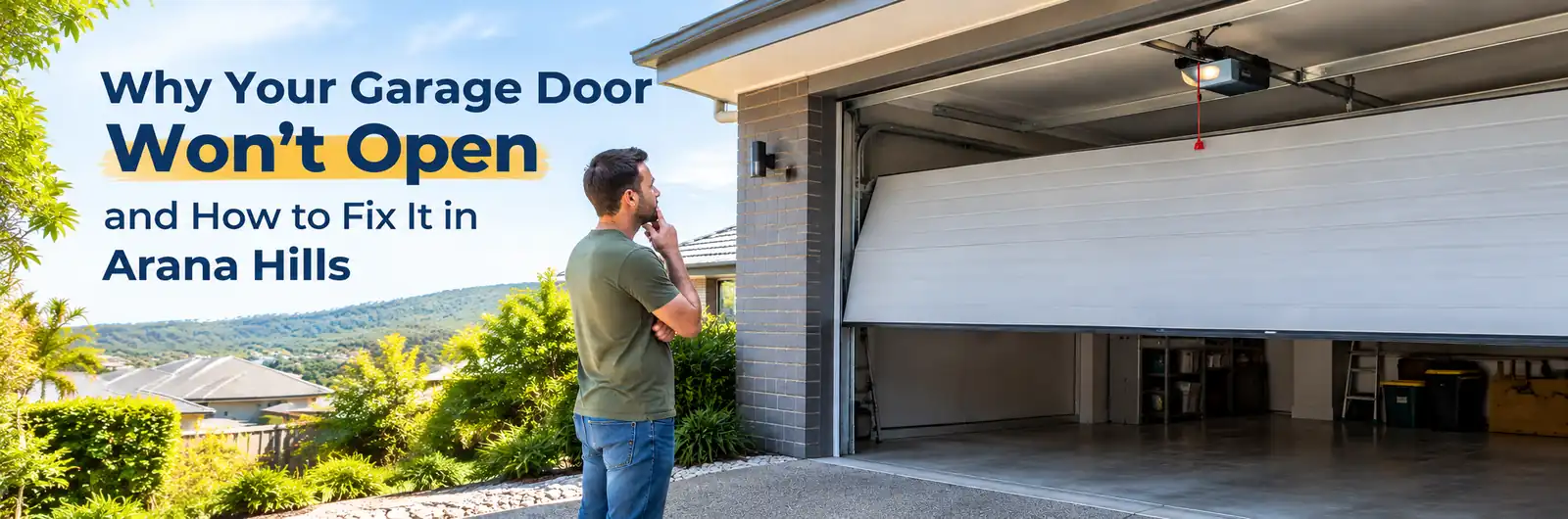
A garage door usually won’t open because of a flat remote battery, no power to the opener, a locked wall control or a door that has been disconnected from the motor. If the door feels heavy or you heard a loud bang, a broken spring or snapped cable is the more likely cause.
This guide covers the quick checks you can do safely, how to open the door by hand, the warning signs of serious faults and when to call a local technician.
Arana Hills has a mix of older family homes and newer builds, so doors here range from original tilt doors to modern sectional doors with smart openers. The checks below suit both.
Common Causes at a Glance
| What you notice | Likely cause | Who fixes it |
|---|---|---|
| Nothing happens with the remote | Flat battery or locked wall control | You |
| No lights or sounds from the opener | No power or tripped switch | You |
| Motor runs but door stays put | Door disconnected from opener | You or a technician |
| Lights flash and door won’t close | Dirty or misaligned sensors | You |
| Loud bang, door feels heavy | Broken spring or cable | Technician only |
| Door jams partway or looks crooked | Off track or bent track | Technician only |
Quick Fixes to Try First
Work from the easiest fix to the hardest. A lot of “broken” garage doors turn out to be a five-minute job, so rule out the basics before you panic.
Check the Remote and Wall Button
Press the wall button inside the garage. If the door moves, your opener is fine and the remote is the problem.
A flat battery is the most common reason a garage door won’t open. Pop in a fresh one and test it close to the door first. If the remote works up close but not from the street, LED lights and other wireless devices nearby can cut its range.
Expert tip: Keep a spare remote battery in the car, not in the garage. You’ll thank yourself the day it dies in the driveway.
Check the Power to the Opener
Make sure the opener is plugged in and the power point is live. Then look at the safety switch or circuit breaker in your meter box.
Brisbane’s summer storms can trip switches or cause short outages, and a garage door opener is often the first thing to show it. If the opener has no lights and makes no sound, power is the likely culprit.
Leave the opener’s casing and wiring alone. That’s a job for a licensed technician.
Check the Lock Button
Many wall controls have a lock or holiday button that blocks the remotes. It’s easy to bump while cleaning or when the kids are fiddling with it.
If the wall button works but the remotes don’t, look for a lit lock light and switch it off.
Opener and Sensor Problems
If the simple checks don’t solve it, the fault is often in how the opener and door work together. These problems look scary but are usually straightforward.
Motor Runs but the Door Won’t Move
If you hear the motor whirring or clunking but the door stays put, the door has most likely been disconnected from the opener.
That usually means the red release cord has been pulled. A bike handlebar, a roof rack or a curious kid can all do it.
On most openers you re-engage the door by pulling the cord again and pressing the remote until the carriage clicks back in. Check your opener’s manual, because the steps vary a little between brands.
If the cord is fine and the motor still spins without moving the chain or belt, a gear or drive part has probably failed. Openers often last around 10 to 15 years, so an older unit may be due for garage door motor replacement rather than another repair.
Door Opens Partway Then Stops
If the door lifts a short way and stops, something is either blocking it or the opener has been told to stop early. A door that stops partway is usually a travel limit or a track problem, not a dead motor.
Look along the tracks for debris, a loose bolt or a roller that’s out of line. Check nothing is stuck in the door’s path.
If the tracks are clear, the opener’s travel limits may have drifted over time, which is a simple adjustment for a technician. Worn rollers or a tired spring can also make the door labour and stall.
Safety Sensors Blocking the Door
Safety sensors are the two small eyes near the floor on each side of the door. They send an invisible beam across the opening, and the door won’t close if something blocks it.
Mostly they affect closing, but a faulty sensor can make the whole opener behave oddly. Flashing opener lights are the usual clue.
Here’s a quick check:
- Wipe both lenses with a soft, dry cloth.
- Move anything blocking the beam, like bins, bikes or toys.
- Look for a steady light on both sensors.
- Gently realign one if its light is off or flickering.
A garage that faces the afternoon sun can also cause trouble, because low sunlight shining straight into a sensor can confuse it.
Serious Faults You Should Not Fix Yourself
Some problems involve heavy parts under real tension. Here the safest move is to stop, keep clear and call someone qualified.
Broken Spring or Snapped Cable
The springs do the heavy lifting, not the opener. The opener only guides a door that is already balanced. A typical door can weigh well over 60 kilos, so without working springs the motor just strains.
Watch for these signs:
- A loud bang from the garage
- A door that feels very heavy when lifted by hand
- The motor humming while the door barely moves
- One side sitting higher than the other
- A visible gap in the spring or a loose, frayed cable
Stop pressing the button and don’t force the door. Springs hold a lot of tension and can cause serious injury. Keep kids and pets away, and book a broken spring replacement with a licensed technician.
Door Off Its Tracks
Tracks guide the rollers on both sides of the door. A bump from the car, loose bolts or worn rollers can knock the door out of line.
You might notice the door stopping partway, grinding, jamming or leaving a gap between the roller and the track. Older tilt and roller doors can also develop bent tracks after decades of use.
Never try to lift the door back into the track yourself. It’s heavy, it can drop without warning and you could make the damage worse. Professional cable and track repairs are the safe way to go.
Expert tip: Take a quick photo of the damage before you call. It helps the technician bring the right parts and speeds up your quote.
How to Open Your Garage Door by Hand Safely
If your car is stuck inside and you don’t suspect a spring problem, the manual release gets you out. Follow these steps.
- Make sure the door is fully closed. Pulling the cord while the door is open can make it drop.
- Find the red cord hanging from the opener rail or motor.
- Pull the cord down firmly once until you hear a click.
- Lift from the bottom with both hands, keeping your fingers clear of the panel joints.
- Check the door stays up before you walk or drive underneath.
- Re-engage the opener once the problem is sorted.
If the door feels very heavy or drops when you let go, stop straight away. That points to a spring or cable fault, and lifting it any further is a risk.
What Arana Hills Weather Means for Your Door
Brisbane’s storm season brings power cuts and tripped switches, and those can leave you locked out or locked in. Some newer openers have battery backup, which is worth asking about if outages are common on your street.
Heat, humidity and strong UV also wear on moving parts and finishes over time. A yearly garage door maintenance service catches small problems before they strand your car.
Expert tip: Learn where your release cord is and show everyone in the house. In an outage, you won’t want to be searching for it in the dark.
When to Call a Professional
Some jobs are for you and some aren’t. Call a licensed technician if:
- You heard a bang or the door feels heavy
- The door is off its tracks or the track looks bent
- A cable is frayed, loose or hanging
- The motor runs but nothing moves after you’ve re-engaged the cord
- The opener is dead after you’ve checked power and the breaker
- Sensors keep flashing after cleaning and realigning
- The door is stuck partway open, so don’t walk or drive under it
In an emergency, a local emergency garage door repair service can get you moving again quickly and safely.
Conclusion
When a garage door won’t open, start simple. Check the remote, the power and the lock button before anything else, then look at the release cord and the safety sensors.
A loud bang, a heavy door, a frayed cable or a door off its tracks means stop and call a professional, because springs and cables hold dangerous tension.
For Arana Hills homes, old or new, a little regular maintenance and knowing where your release cord is go a long way when a storm or a flat battery strikes.