
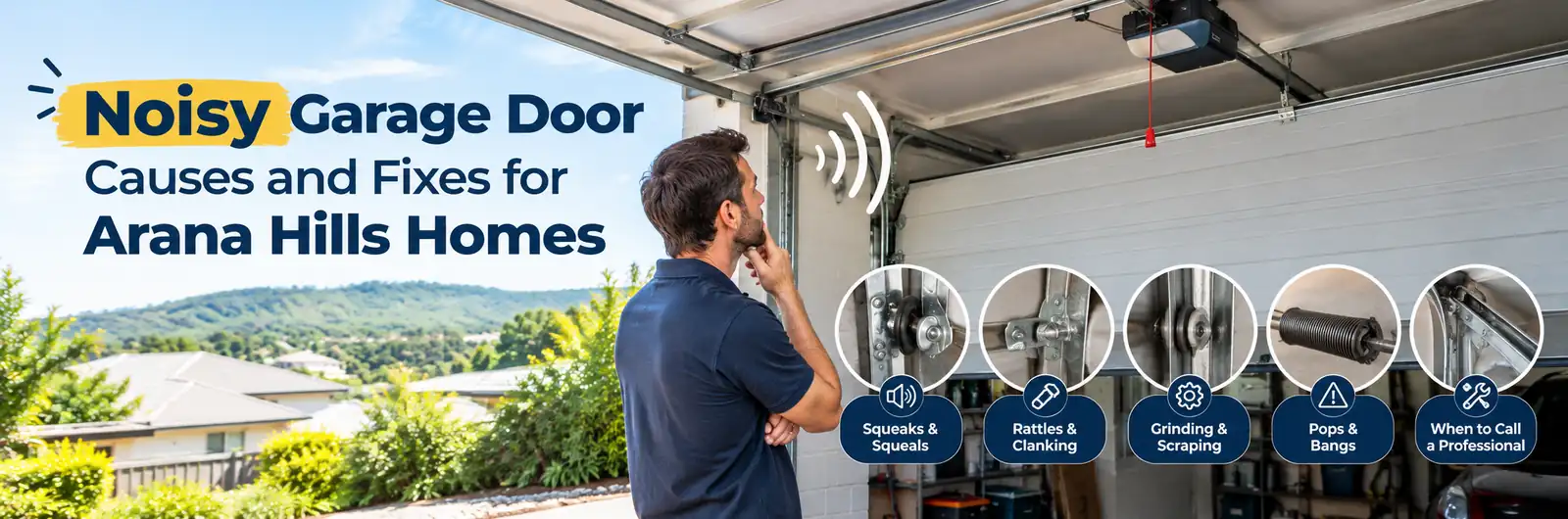
A noisy garage door is usually caused by dry moving parts, loose hardware or worn rollers, and most of those are easy fixes. Loud pops and bangs are different, because they often point to a spring or roller problem that needs a professional.
This guide covers what each sound means, the safe fixes you can do yourself, what to lubricate and what to leave alone, and when to call a local technician.
Arana Hills has older doors with years of wear and newer sectional doors with quieter openers, so the same noise can mean different things. The tips below help you tell which is which.
What Your Garage Door Noise Is Telling You
| The sound | Usual cause | What to do |
|---|---|---|
| Squeak or squeal | Dry rollers or hinges | Lubricate |
| Rattle | Loose bolts or screws | Tighten |
| Grind or scrape | Worn rollers, dry bearings or a loose chain | Lubricate, tighten or replace |
| Pop | Roller out of its track or binding | Stop and call a technician |
| Loud bang | Broken spring or snapped roller | Stop and call a technician |
Two quick questions help narrow it down. Does the noise happen when the door opens, closes or both? And did it arrive suddenly or build up slowly?
A sudden new noise usually points to a part that has failed, while a gradual one usually means wear or dryness.
Harmless Noises You Can Usually Fix
Noises that build slowly over weeks are usually a maintenance issue. They’re a sign the door is working harder than it should, so it pays to sort them out early.
Squeaking and Squealing
Squeaks almost always come from friction. Dry hinges, rollers and pivot points are the usual culprits, and dried-out weather stripping between the panels can squeak too.
A light spray of the right lubricant on the moving parts usually settles it. If the squeak keeps coming back, the rollers may be worn and due for replacement.
Rattling and Clanking
Every time the door moves, it vibrates. Over months and years, that shakes nuts, bolts and brackets loose, and the door starts to rattle in its tracks.
With the door closed, check the hinges, track brackets and any bolts you can see. Tighten what’s loose with a socket or adjustable spanner, but don’t overtighten, because that can strip the thread or crack a bracket.
Expert tip: Do a quick tighten-up once or twice a year. A loose bolt that’s caught early costs nothing to fix, while a loose track can end up with a damaged door.
Grinding and Scraping
Grinding usually means metal is rubbing on metal. Worn rollers, dry bearings and dirt in the tracks are common causes, and rust makes it worse.
If the noise comes from near the opener, a loose chain or belt can also grind. Tightening it may help, but if the noise stays, have the opener checked.
Warning Noises That Need a Professional
Some sounds are the door telling you to stop. If you hear any of these, don’t keep running the door to see if it improves.
Popping Sounds
A pop usually means pressure is building somewhere. A roller may have slipped out of its track, or the panels may be binding at their joints.
Left alone, that stress can damage panels and rollers and make the repair bigger. Stop using the door and book a technician to look at the tracks and rollers.
Loud Bangs
A loud bang can mean a broken spring, a snapped roller or a section that has shifted. Springs hold a lot of tension, and spring work is never a DIY job.
If the door suddenly feels heavy after a bang, stop using it and keep the kids and pets clear. A professional broken spring replacement is the safe way forward.
Clunking and Thumping
A clunk or thump can mean the opener is struggling to move the door. It can also mean the door is dropping onto the floor harder than it should, which often points to a spring problem.
If the clunk comes with a door that feels heavy or uneven, stop using it. Don’t keep pressing the button and hoping it settles down.
Bangs When the Door Closes
Not every bang is a spring. A worn or missing rubber seal along the bottom of the door can make it slam onto the floor, and you may also notice draughts and damp getting in.
Check the seal for gaps or cracks. If it’s perished, replacing it is a simple fix that quietens the door and keeps the weather out.
How to Quiet Your Garage Door Step by Step
Here’s a safe routine for the harmless noises. Do it with the door closed and the opener switched off at the wall if you’re working near moving parts.
You won’t need much. A socket set or adjustable spanner, a clean cloth and a can of silicone spray cover most jobs.
- Look over the door, tracks, rollers and hinges for loose, bent or worn parts.
- Tighten loose bolts and screws, without overdoing it.
- Wipe dirt and debris out of the tracks with a cloth.
- Lubricate the hinges, roller bearings and pivot points sparingly.
- Wipe off any extra lubricant so it doesn’t drip.
- Run the door a few times to spread the lubricant and listen for changes.
On roller and sectional doors, polishing clean tracks with methylated spirits can help the door run more smoothly.
If the door is still noisy after all that, it’s time for a professional look rather than more DIY.
What to Lubricate and What to Skip
Use a silicone spray or white lithium grease, and use it sparingly. Apply it to:
- Hinges and pivot points
- Roller bearings
- The roller stem where it meets the track, but not the nylon wheel
Leave these alone:
- The tracks. Lubricant attracts dust and grit, which wears out the rollers.
- Nylon roller wheels. They don’t need it.
- Painted surfaces and weather stripping.
- WD-40. It’s a water displacer, not a long-lasting lubricant, and it can attract grime.
Wipe each part clean first, because lubricant over dirt just turns into a sticky paste. Lubricating every three to six months keeps most doors running quietly.
Never Touch the Springs
The springs and the brackets holding them are under heavy tension. Don’t adjust, grease or loosen them. If you suspect a spring problem, that’s a job for a licensed technician.
Expert tip: Once a month, stand inside the garage and listen to a full open and close. A new sound is much easier to fix when it’s still small.
Noisy Opener or Noisy Door
Sometimes the noise isn’t the door at all. Here’s a simple way to tell.
With the door fully closed, pull the red release cord so the door is disconnected from the opener. Lift the door by hand, slowly, and listen. If the door is quiet by hand but noisy with the opener, the opener is the problem.
If the door still makes noise by hand, the fault is in the rollers, tracks or hinges. And if the door feels very heavy or drops when you let go, stop straight away, because that suggests a spring or cable fault.
A sagging or dry chain can also clatter along the rail. If your manual shows how to adjust it, a small tweak may quieten it, but if you’re unsure, leave the opener to a technician.
Older chain and screw-drive openers can be loud, especially when the chain is loose or dry. A belt-drive unit is generally quieter, so a noisy ageing opener may be worth upgrading. Our garage door motor replacement options cover quieter modern units.
What Arana Hills Homes and Weather Do to Door Noise
Older Arana Hills homes often have doors with metal rollers running in metal tracks, and that combination is naturally louder. Swapping to nylon rollers can make a big difference, and nylon rollers don’t need lubricating.
Brisbane’s humidity, dust and summer storms all take a toll on moving parts over the years. A yearly garage door maintenance service tightens, cleans and lubricates everything properly before small noises become bigger repairs.
Newer sectional doors with belt-drive openers run much quieter, so a sudden new noise on one of those is worth taking seriously.
When to Call a Professional
Call a licensed technician if you notice any of these:
- Popping or banging sounds
- A door that feels heavy, uneven or jerky
- A visible gap in a spring, or a frayed cable
- A roller out of its track, or a bent track
- Grinding that continues after tightening and lubricating
- Noise from the opener that doesn’t improve
A local team offering cable and track repairs can fix track and roller problems properly before they cause bigger damage.
Conclusion
Most noisy garage doors just need tightening, cleaning and a little of the right lubricant. Squeaks, rattles and light grinding are your cue to do a bit of maintenance.
Pops, bangs and heavy-feeling doors are different. Stop using the door and call a professional, because springs, rollers and cables hold dangerous tension.
For Arana Hills homes, old or new, a regular listen, a yearly service and the right lubricant keep the door quiet and the bigger repair bills away.